
Slot Volatility Explained: Why Big Wins Are Not Always Better
Two players spin the same online slot for an hour with the same bankroll and the same bet size. One walks away up 40%. The other busts out in twenty minutes. Neither did anything wrong, and neither got cheated. The difference comes down to a single number most casual players never look at: volatility. Understand it, and you stop judging slots by their jackpot screenshots and start picking games that actually fit how you play.
What Volatility Actually Measures
Volatility, sometimes called variance, describes how a slot distributes its payouts over time. It has nothing to do with the return to player percentage, which is a separate figure. RTP tells you what a game pays back over millions of spins; volatility tells you the shape of that journey.
A low-volatility slot pays small amounts frequently. You will see your balance tick up and down in gentle waves, and a session can stretch a long time on a modest bankroll. A high-volatility slot does the opposite. Long dead stretches with almost nothing back, punctuated by rare but enormous hits. Same theoretical RTP, completely different experience.
Here is a rough way to think about it in practice: Before making a choice, it helps to review slot dana.
- Low volatility: hit frequency often above 30%, top wins maybe 200x to 500x your stake
- Medium volatility: hit frequency around 20-25%, top wins in the 1,000x to 5,000x range
- High volatility: hit frequency under 20%, max wins frequently capped at 10,000x, 25,000x, even 50,000x
Those max win caps are not marketing fluff. They are structural. A game offering a 50,000x ceiling has to fund it by paying less often along the way, otherwise the math would collapse.
The Bankroll Math Nobody Talks About
Here is where volatility gets practical. A $200 bankroll at $1 per spin gives you 200 spins. On a low-volatility game, you might realistically survive 300 or 400 spins because small wins keep recycling your balance. On a high-volatility game, a 200-spin sample might return literally nothing, and you are done in under an hour.
That is not bad luck. That is the game working as designed. High-variance slots funnel most of their payout into rare events, so the vast majority of sessions end in a loss even when the math is perfectly fair.
Rule of thumb worth remembering: if you want a session to last, match your bankroll to at least 300 to 500 bets on low or medium volatility games, and 500 to 1,000 bets if you insist on the high-variance monsters. Playing a 50,000x slot with a 50x bankroll is the equivalent of buying a lottery ticket and expecting a salary.
Where the Big Wins Actually Hide
The slots that dominate YouTube compilations and streaming highlight reels are almost always high volatility. Providers like Nolimit City, Hacksaw Gaming, and Push Gaming built their reputations on brutal variance with enormous ceilings. Games such as San Quentin xWays or Chaos Crew 2 can pay thousands of times your stake, but they can also eat 500 spins without a meaningful return.
Meanwhile, the workhorses of the industry, the Starbursts and Book of Ra clones, sit firmly in the low-to-medium range. They will never make a headline, but they will keep you entertained for hours on a small deposit.
Neither category is objectively better. The mistake is picking a game whose volatility profile fights the way you actually want to play.
Reading the Signals Before You Spin
You do not need to dig through developer documentation to get a sense of a slot's variance. A few quick signals do most of the work:
- Check the max win advertised. Anything above 10,000x is almost certainly high volatility. Above 25,000x and you are in extreme territory.
- Look at the paytable for regular symbols. If five-of-a-kind on the top symbol pays 5x your stake, the base game is subsidized by the bonus. If it pays 50x, returns are more evenly spread.
- Watch the bonus trigger rate. Some slots tell you the odds. A 1-in-400 trigger rate signals high variance; 1-in-150 suggests a gentler curve.
- Try a demo session first. Nothing beats 100 free spins to feel how a game breathes.
Some jurisdictions and operators now publish volatility ratings on the game tile itself. When in doubt, that label is more useful than the theme or the graphics.
Volatility Beyond the Reels
This concept is not slot-specific. It shows up across the entire iGaming world once you start looking for it.
In poker, cash games sit at the low-volatility end: small edges, frequent small pots, results that converge toward skill quickly. Multi-table tournaments are the high-variance extreme. A winning MTT player can go dozens of tournaments without a final table and still be profitable over thousands of events. That is why bankroll management in tournaments demands 50 to 100 buy-ins while a cash game grinder can often survive on 20.
Sports betting follows the same logic. Backing heavy favorites at short odds is low variance but leaves almost no margin for error, because one upset wipes out ten wins. Betting longshots at 20/1 is the high-variance route: you will lose most weeks, but a single hit can cover a month. Accumulators crank the variance higher still, stacking multiple legs that each have to land.
Even blackjack and roulette split along the same lines. Straight bets on black or red produce frequent small outcomes; a single-number roulette bet pays 35 to 1 but hits roughly once in 37 spins. The house edge is identical. The ride is not.
Matching the Game to Your Temperament
The most useful question is not "which slot has the best RTP" but "which variance fits my bankroll and my patience." A player who gets frustrated after 50 dead spins should stay far away from extreme volatility games, regardless of their potential. A player chasing a story worth telling will find low-volatility slots boring and will take unnecessary risks to manufacture excitement anyway.
Be honest about both numbers: what you can afford to lose in a session, and how long you want the session to last. Then pick a volatility tier that respects those numbers. A generous bonus round on a medium-variance slot enjoyed on a comfortable bankroll beats a soul-crushing grind on a 50,000x game every single time.
The Long Game
Volatility is not a flaw in the design of casino games. It is the feature that allows wildly different player experiences to coexist on the same platform. A slot without variance would pay out at a perfectly flat rate, and nobody would play it because there would be no reason to watch the reels.
What separates players who enjoy iGaming for years from those who burn out in a month is not luck. It is understanding that variance is a dial, not a verdict. Set that dial deliberately, size your bets to survive the swings you have chosen, and the games become what they were always meant to be: entertainment with a known cost, not a lottery ticket in disguise.
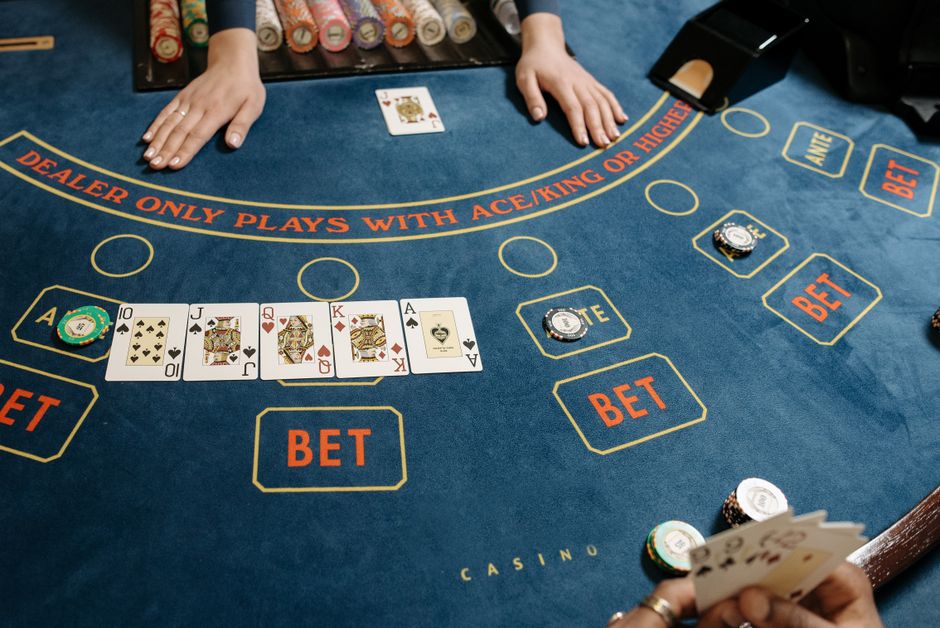
The iGaming Edge: How Smart Players Approach Casino, Betting, Slots & Poker
You’ve seen the flashy ads, the bonus banners screaming “free spins,” and the Twitch streamers turning $50...

How to Carve Rubber Stamps for Repeating Motifs on Fabric
Carve a simple rubber stamp, load it with fabric ink and print evenly spaced repeats onto cotton or linen...
About Us